
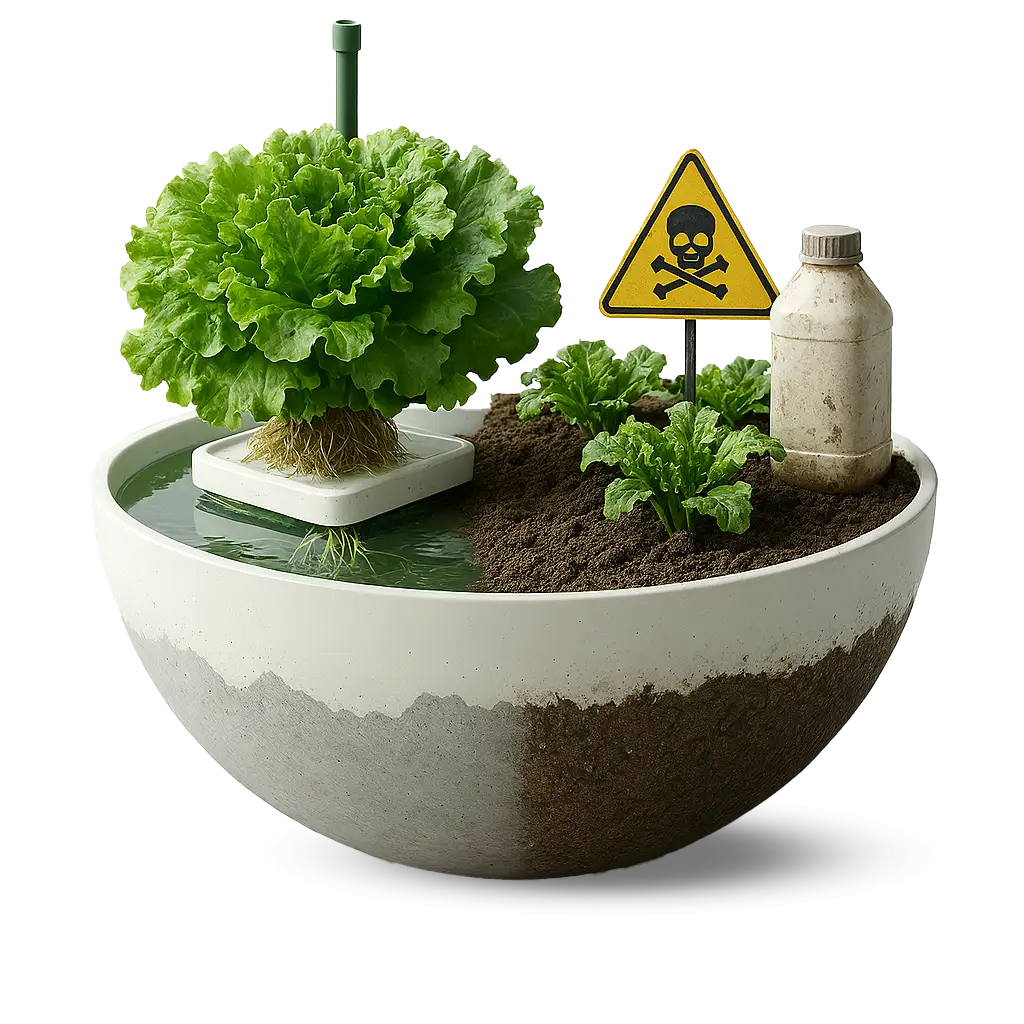
Industrial agriculture, relying on chemical fertilizers, has long pursued mass production—at the cost of soil and water pollution and threats to human health. In contrast, Hydrogen, through organic farming and hydroponic systems, offers a sustainable and healthy path.
This is a battle for the future. The choice is yours: a cleaner earth or depleted soil?
Industrial agriculture, through extensive use of chemical fertilizers, pesticides, hormones, and genetically modified seeds, has managed to increase production on a large scale. Yet this apparent success has come at a heavy cost:
Soil erosion: Continuous use of chemicals destroys the living structure of soil and reduces its fertility.
Water pollution: Leakage of nitrates and phosphates into groundwater threatens human health and ecosystems.
Loss of biodiversity: Chemical pesticides eliminate beneficial insects, fungi, and natural microorganisms.
Rise in chronic diseases: Chemical residues in food products are linked to illnesses such as cancer, allergies, and hormonal disorders.
In contrast, organic farming, rooted in the principles of nature, seeks to restore lost balance. This method relies on natural fertilizers, crop rotation, biological pest control, and the preservation of biodiversity. Its benefits go beyond individual health:
Soil regeneration: The use of compost and organic fertilizers keeps the soil alive and fertile.
Cleaner water: Avoiding chemical inputs protects water resources from pollution.
More nutritious products: Studies have shown that organic foods contain higher levels of antioxidants and nutrients.
Economic sustainability: With the growing global demand for healthy products, organic farming has become a rapidly expanding market.
Chemical agriculture, backed by massive advertising budgets, tries to portray organic farming as inefficient and expensive. But the reality is different: the hidden costs of chemical agriculture—from environmental destruction to healthcare expenses—are far greater than the price of organic products.
In the heart of the soil, a silent battle is unfolding—a clash between two opposing approaches to agriculture: organic farming, built on nature and sustainability, and chemical farming, which, under the promise of mass production, has turned the land into an industrial laboratory. This battle is not only about farming methods—it is about the future of human health, the environment, and the global economy.
In this context, brands like Hydrogen, with a scientific and technological approach, strive to move organic farming beyond its traditional form and transform it into a modern economic model.
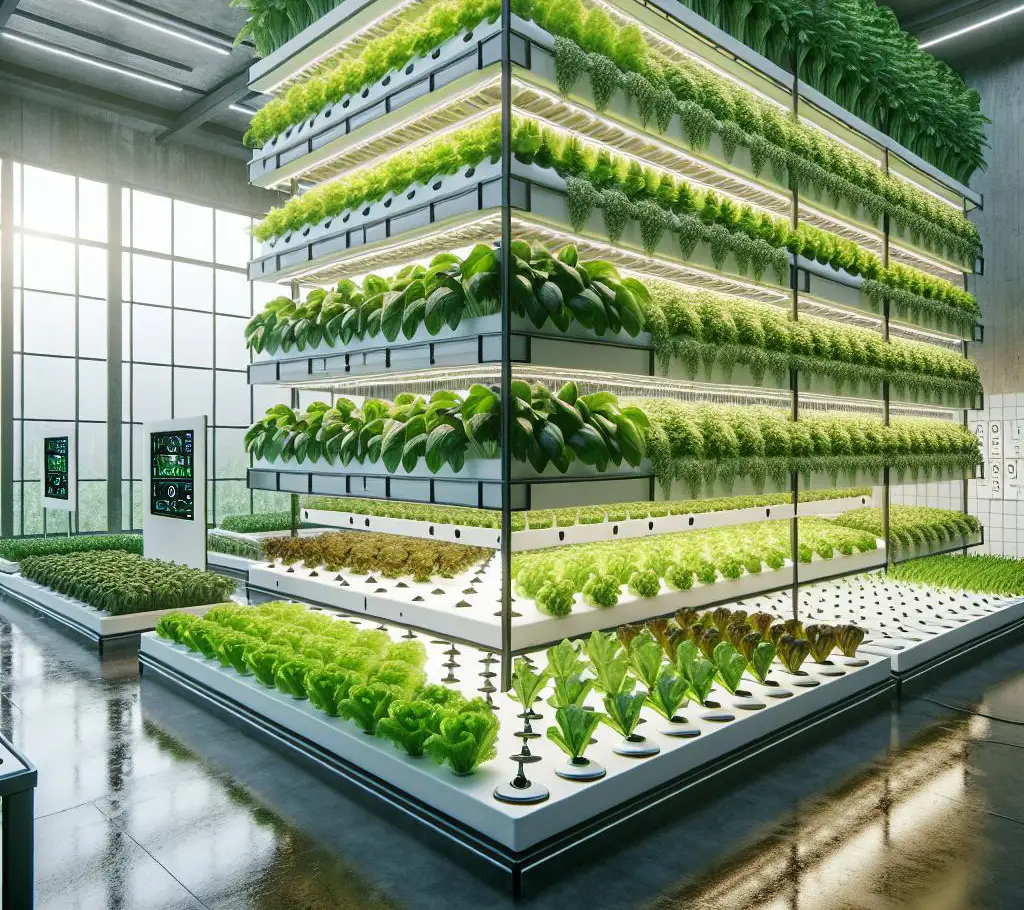
The green battle does not necessarily have to remain polarized. With the advent of technologies such as hydroponics, vertical farming, and smart chain farms (Hydrofarm), organic cultivation can be implemented on an industrial scale with high efficiency. These models not only preserve the land but also enable sustainable, controlled, and traceable production.
The choice is ours: a clean earth or depleted soil?
In the end, this battle depends on our decision. Do we want our food to come from polluted, chemical soil—or from land that is alive and sustainable? Should our investments chase short‑term profit, or build a healthier future?
Hydrogen, with faith in clean farming, stands at the forefront of this battle—and invites you to join us on this green path.
0 / 5. 0